“After years of childhood abuse, I lived in a state of chronic dissociation. I could function on the outside, but I was barely present in my own life. Through this work, I began to feel continuity, safety, and real contact with myself again.”
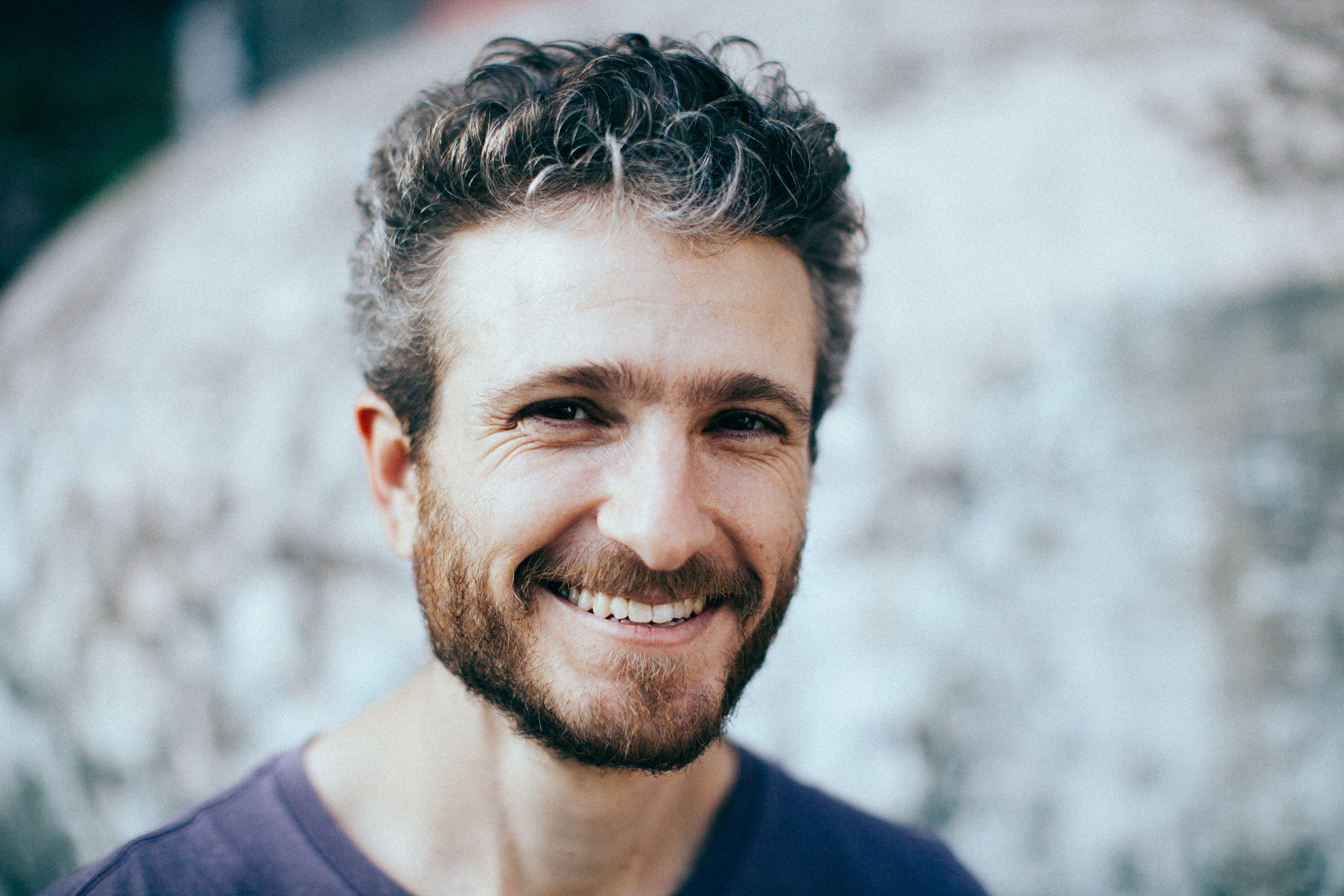
Tomer Weiss
MA · Licensed Clinical Social Worker & Somatic Psychotherapist
Trauma therapy for complex cases most therapists struggle to treat
PTSD, dissociation, panic, and spiritual destabilization — treated through nervous system regulation and structured clinical work
You might recognize yourself here:
- You understand your patterns, but they don’t change.
- Your body reacts before you can control it.
- You experience panic, shutdown, or dissociation.
- Therapy helped, but something remains unresolved.
Who I Work With
I work primarily with adults who are living with:
- Complex PTSD
- Sexual trauma
- Combat trauma & The aftermath of terror attacks
- Dissociation
- Addiction (including active addiction)
- Psychosis (when stabilized or emerging from acute episodes)
- Chronic anxiety and panic
- Unexplained somatic symptoms
- Meditation-induced destabilization, derealization, or spiritual crisis
If you have struggled to find a place where your experience can be fully held, this may be that place. Some people are told their trauma is “too complex.” Others worry about being misunderstood or reduced to a diagnosis.
Even when your history feels complex or overwhelming, we can approach it in a way that makes healing possible.
What clients have achieved
“Combat trauma left me with flashbacks, anxiety, and constant hypervigilance. I felt like my body was always bracing for the next threat. Therapy helped me move into regulated states without feeling defenseless or exposed.”
“Panic had narrowed my life more and more. I was avoiding public spaces, travel, and ordinary situations I once handled with ease. Over time, I rebuilt trust in my body and was able to move through the world more freely again.”
My Approach
My work is trauma-informed, somatically grounded, and integrative.
I see therapy as a process of helping the body and mind return to functionality and inner comfort.
When we go through difficult or overwhelming experiences, our body–mind system, especially the nervous system, adapts in order to protect us. These adaptations can later appear as anxiety, shutdown, chronic pain, dissociation, repeated patterns in relationships, or other distressing symptoms. In many cases, these symptoms began as coping strategies, intelligent responses that were once necessary for survival. Over time, however, what once may have protected us might now be limiting or self-sabotaging.
Therapy works by gradually helping the body–mind system reorganize. As inner safety increases, the nervous system can form new responses to stress: adaptive responses that are no longer driven by past events.
Change happens when we weave techniques that create enough stability for the system to loosen old patterns and develop new ways of coping while also using methods that reshape how we relate to the past — how we remember it and how we respond in situations that resemble it.
Together, we work to restore regulation, integration, and a sense of internal steadiness. As the nervous system becomes more regulated, physical symptoms often decrease, emotions become more balanced, and the mind grows clearer. As clarity increases, new choices become available. The past no longer dictates reactions in the present.
For me, therapy is not only about talking about the past, but about actively creating new patterns in how you feel, think, and respond, so you can become more balanced, centered, and at ease.
The Process
Standard sessions are 50 minutes. When appropriate, extended trauma-processing or breathwork sessions (80–120 minutes) are also available.
Sessions typically take place once per week, with the option of meeting more frequently during periods of acute stress.
I offer a free 15-minute consultation so we can briefly speak and determine whether this work feels like the right fit.
I offer both online and in-person sessions. Therapy may be short-term or long-term, depending on your goals and the depth of the process.
Modalities & Qualifications
Depending on your needs, our work may integrate the following techniques:
- Somatic Experiencing
- EMDR
- Psychodynamic psychotherapy
- CBT
- NLP
- Grief counseling
- Parts work
- Trauma Stabilization
- Mindfulness-based interventions
- Breathwork
- Yoga therapy
- Somatic Bodywork
- Family Constellations
- Dream Analysis
- Dynamic meditation methods
- Nervous system regulation techniques
Each modality is used intentionally and adapted to the individual. Below I will give a short description of the main approaches and how and when I apply them.
Somatic & Trauma Work
Trauma is a psychological and physiological response to events that overwhelm our ability to cope. These may include an attack, a natural disaster, an accident, or any experience that felt “too much” at the time. It is not defined solely by what happened to you, but by what the experience created within you. There is no objective measuring stick, the same event can affect different people in very different ways. What matters is how the event was processed, how it was held in the body and mind, and whether you had enough support to process it and put it behind you. For this reason, my approach focuses on providing the right conditions and process for recovery.
I apply Somatic Experiencing principles, approaching the symptoms that you are carrying today as residual responses from events that became “stuck” in the system. With careful pacing and staying in a balanced state (our window of tolerance), we use awareness of bodily states, regulation techniques, reprocessing techniques, and bodily interventions to resolve trauma at the level of the body and nervous system.
When appropriate, I use structured and evidence-based approaches such as: EMDR and Trauma focused CBT techniques to reprocess the traumatic events and triggers so they no longer affect you the way they do.
Depth & Parts Work
Trauma especially from childhood, often creates inner divisions: protective parts, conflicting impulses, and dissociative structures. Through Psychodynamic psychotherapy we can look into the past, by relating to each impulse or pattern as a distinct “part” of the self — a method known as Parts Work — we begin to understand and integrate what once felt fragmented, becoming more whole in the process.
When needing to uncover information that is held in our subconscious I use a technique known as "Family constellations", dream analysis and guided meditations to explore and bring to light what may be held outside of conscious awareness.
Transpersonal & Spiritual Crisis Work
Some individuals experience destabilization related to meditation, intensive spiritual practice, or altered states of consciousness.
This can include:
- Derealization (feeling the world is unreal) or depersonalization (feeling we are unreal)
- Bodily and "Energetic" phenomena sometimes described as “Kundalini syndrome”
In these cases, my work remains clinical and grounded. Spiritual experiences are neither dismissed nor romanticized. They are understood within psychological and neurobiological frameworks and integrated carefully.
You do not need to identify as spiritual for this work to be meaningful. Therapy remains steady, structured, and evidence-informed, even when it is informed by and respectful of traditional frameworks.
Therapeutic Touch & Somatic Bodywork
In in-person sessions, I may incorporate therapeutic touch and somatic bodywork when clinically appropriate.
This can include:
- Deep tissue release related to trauma-based muscular holding
- Psycho-motoric repatterning
- Manual nervous system regulation techniques
Touch is always optional. Clear consent and boundaries are maintained at all times.
For those who prefer not to be touched, somatic work can be guided verbally through focused awareness and psychomotor processes. Effective body-based work does not require physical contact.
Locations & Format
In-person sessions are available in:
Public clinic – Nahariyah
In-person sessions are available in a public clinic format in Nahariyah.
Private clinic – Kiryat Atta
In-person sessions are available in a private clinic format in Kiryat Atta.
Online sessions are conducted via Zoom.
Sessions may be reimbursed depending on your insurance coverage.
Fees
| Session Type | Fee |
|---|---|
| 50-minute online session | €100-150 |
| 80 minutes bodywork session | €120-200 |
| Group Counseling Session | €30-60 |
I charge a sliding scale to help you afford the sessions based on your ability during these challenging times
Frequently Asked Questions
Do you only work with trauma?
No! I work with many clients who have different things they wish to work on, from needing help with
relationships and life changes, through identity questioning to depression and anxiety.
Do you work with severe trauma?
Yes. No experience is too big or too complex to work with. Together, we approach it carefully, at a pace your
nervous system can tolerate.
Do I need to remember my trauma or talk about it during the sessions?
No. We can work with your trauma without needing to talk about it or remember it. Often, as the system
becomes more regulated, speaking about it feels easier — but it is never required for the work to move
forward.
Do you work with Complex PTSD?
Yes. I do.
Do you work with clients on medication?
Yes. I collaborate with psychiatrists when needed.
Can therapy include body-based work?
Yes — either through consensual therapeutic touch (in-person) or guided somatic processes without touch.
Do I need prior experience to work with you?
No. I can be your first experience of therapy.
Book a free 15-minute consultation
If you have struggled to find a place where your experience can be fully held, this may be that place. Even when your history feels complex or overwhelming, we can approach it in a way that makes healing possible.